
Sant'Anna School of Advanced Studies
Sant'Anna was formally established in 1987, uniting an older postgraduate school descended from the Scuola Normale's original medical and legal college with the Sant'Anna convent, from which it takes its name and seat. It was explicitly modelled on the Normale but built around applied sciences rather than pure humanities and sciences.
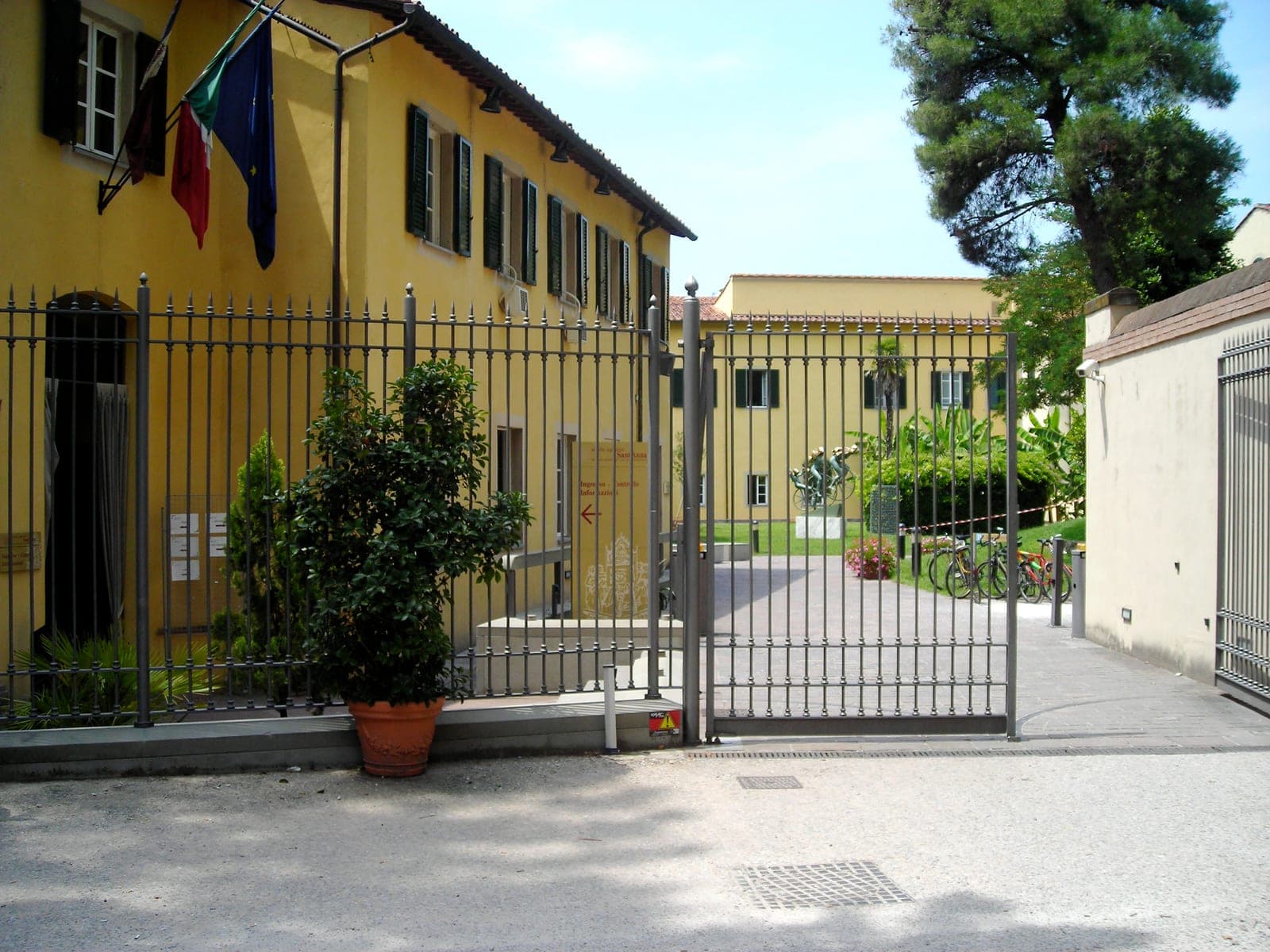
- City
- Pisa
- Type
- Public university
- Official site
- Visit website
- Admissions
- How to apply
About the university
Its programmes span biorobotics, communication and information technologies, life sciences, economics and management, and law, politics, and development — a genuinely distinct focus from the Normale's more classical range. Like the Normale, admission runs through a separate, highly competitive written-and-oral entrance exam held at Pisa's Porta Nuova teaching centre, on top of a regular University of Pisa degree, for a very small honours cohort each year.
It's one of only a handful of Italian "special-statute" public universities — a small, research-intensive institution rather than a broad-intake degree provider — with a strong emphasis on international Master's and PhD programmes specifically.
Because Sant'Anna students are also University of Pisa students, our general guidance on living and studying in Pisa — housing, arrival, settling in — applies here too, alongside the guided application process for the exam itself.
See the Pisa city guide for what living and studying in the city looks like beyond the university itself.

Living in Pisa
Rent, transport, and settling in
How applying here works
- 1
Universitaly pre-enrolment
Your application to Italy, filed on the government portal.
- 2
Declaration of Value or CIMEA
Your prior qualification, made readable to an Italian university.
- 3
Entrance test or language check
Where the faculty asks for one — this is what preparation is for.
We walk you through each step inside the portal. How the application service works, or see the full 20-step journey.